
Bryce Canyon Day Trip from Zion National Park: The Perfect One-Day Itinerary
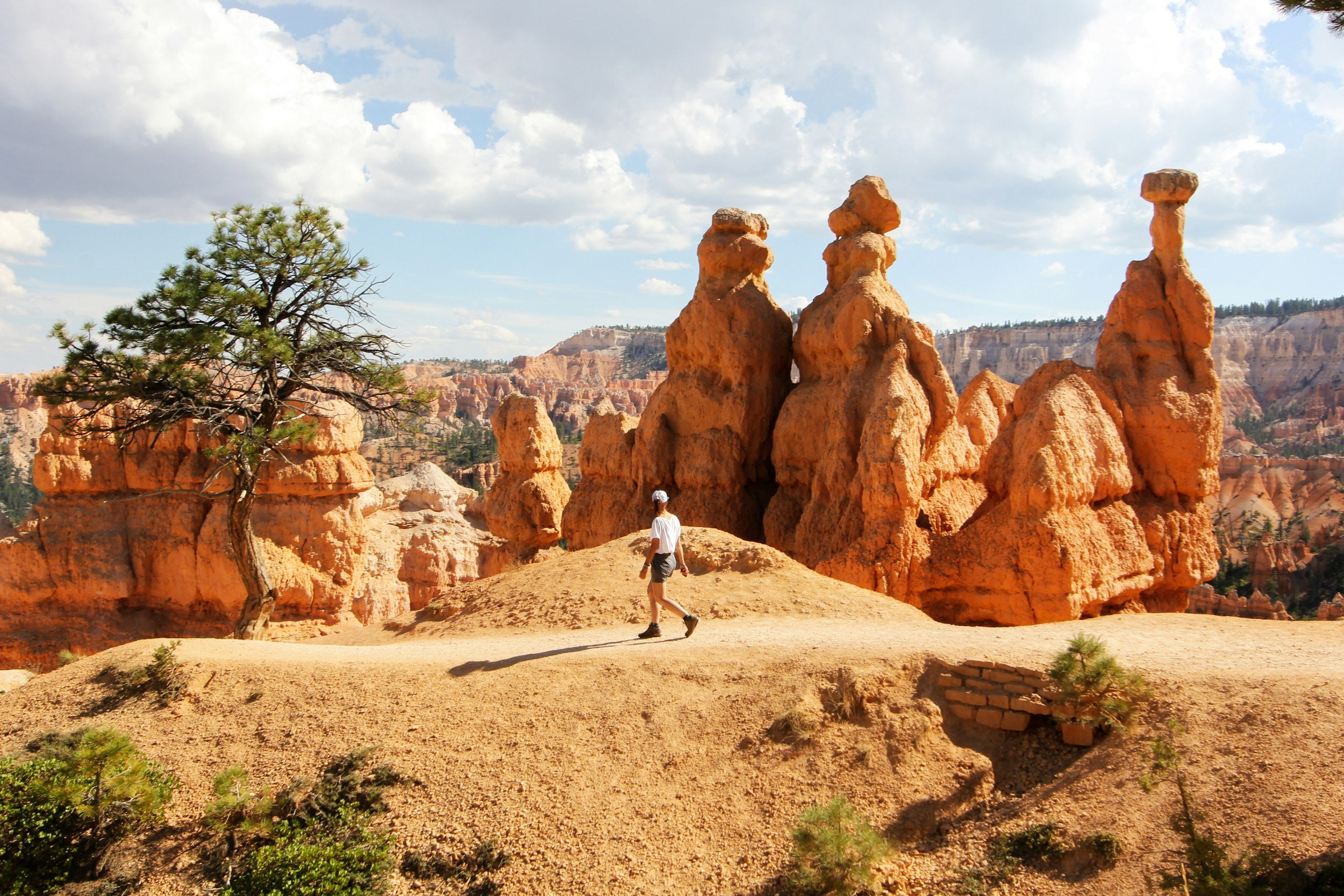
Scenic hiking trail through the famous hoodoos of Bryce Canyon National Park during a day trip from Zion National Park.
Most people visiting Zion National Park don't realize they're sitting two hours from one of the most surreal landscapes on Earth. Bryce Canyon National Park isn't just another stop on a Southern Utah road trip; it's a completely different world. Where Zion impresses you with scale, Bryce unsettles you with strangeness. And if you're already spending three or four days in Zion, skipping it would be one of the great missed opportunities in American travel.
Here's everything you need to know to do the day trip right.
Why Bryce Canyon and Zion Are Worth Doing Together
Zion and Bryce sit about 85 miles apart, close enough to combine in a single day trip, distinct enough that they feel like entirely separate ecosystems. The contrast between the two parks is genuinely striking, and it's one of the main reasons people say a Zion-Bryce combination becomes the highlight of their entire Utah vacation.
Zion sits at roughly 4,000 feet elevation. Its canyon walls are Navajo sandstone, warm red and cream, deposited by ancient Sahara-scale sand dunes over 190 million years ago. The park's signature experiences involve descending into the landscape: hiking the canyon floor along the Virgin River, pressing through the tight squeeze of the Narrows, or ascending the chains of Angels Landing.
Bryce Canyon sits at over 8,000 feet — nearly a mile higher than Zion. The geology is completely different. You're no longer looking at ancient sand dunes; you're looking at lake sediments from the Eocene epoch, roughly 50 million years old, rich in iron and manganese oxides that stain the rock in vivid shades of red, orange, pink, and white. And instead of descending into a canyon, you stand on a plateau rim and look down into a series of natural amphitheaters filled with thousands of rock spires called hoodoos.
That elevation difference also means Bryce is meaningfully cooler than Zion in summer, often 15 to 20 degrees Fahrenheit lower. If you've been hiking Zion in July or August heat, a day trip to Bryce can feel like stepping into a different season.
The Drive Between the Parks: Better Than You'd Expect
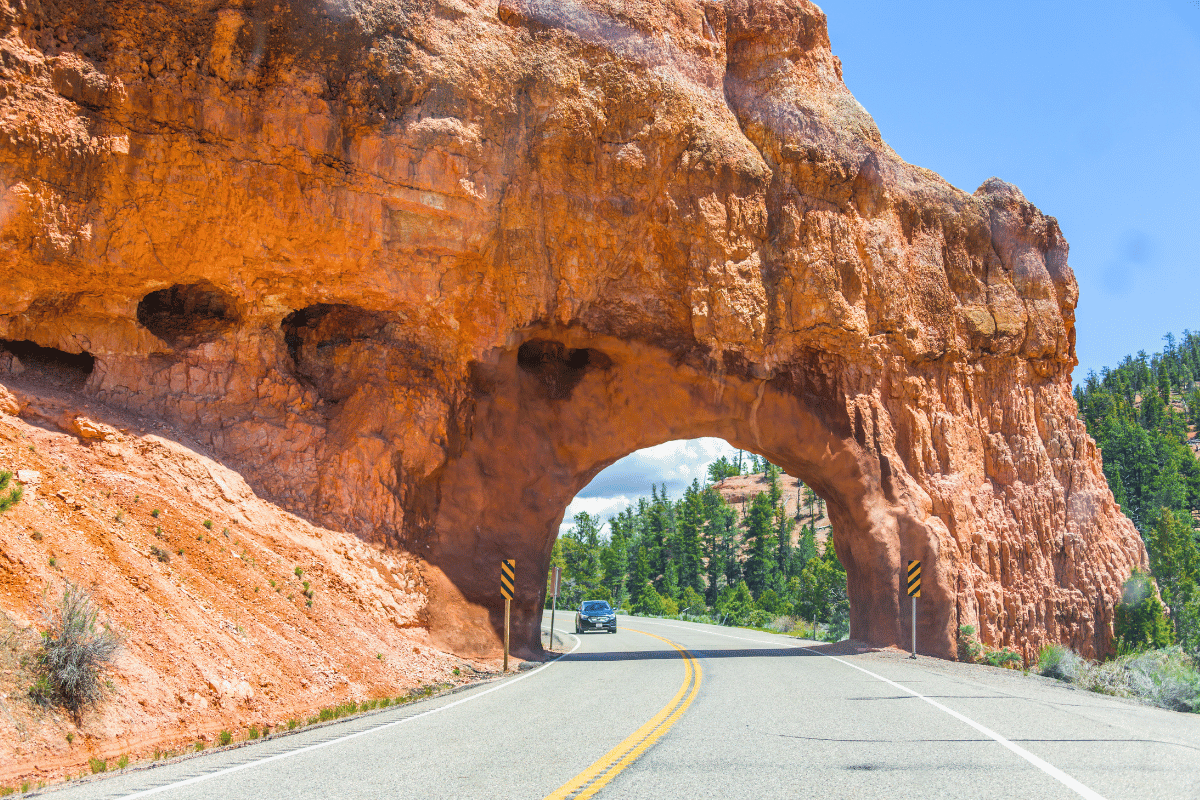
Driving through the breathtaking red rock landscapes on your way to Bryce Canyon National Park.
The route from Zion to Bryce Canyon is itself worth the trip. Don't just treat it as dead time, pull over when something catches your eye.
From Zion's South Entrance: Head east on Highway 9 through the park, passing through the mile-long Zion-Mount Carmel Tunnel (built in 1930, still an engineering spectacle), emerging into the slickrock canyon country of Zion's east side. The checkerboard mesa formations here are some of the most photographed geology in the park — swirling crossbedded sandstone layers that look almost hand-carved.
Once outside the park, you'll drop into the valley town of Mt. Carmel Junction and turn north on US-89. This highway through Long Valley is the scenic backbone of the whole drive. You'll pass through the small towns of Glendale and Orderville — Mormon pioneer communities settled in the 1860s and 70s — with open ranchland, red cliffs, and the Sevier River running alongside the road.
At Panguitch, turn east on Highway 12 or UT-63 toward Bryce Canyon City. The road climbs steadily into Dixie National Forest, and you'll feel the temperature drop and the vegetation shift — scrubby desert juniper gives way to ponderosa pine, then into the high-elevation forests of white fir and blue spruce surrounding the park.
Wildlife along the route: Keep an eye out for pronghorn antelope on the valley floor, mule deer at dawn and dusk, and, if you're passing through the Paunsaugunt Plateau area, Utah prairie dogs, which are surprisingly abundant near the park entrance. In summer, wild turkey flocks are common near Bryce Canyon City.
Total drive time: Plan for about 1 hour 45 minutes to 2 hours, depending on your starting point in Zion and stops along the way.
What Makes Bryce Canyon Geologically Unique
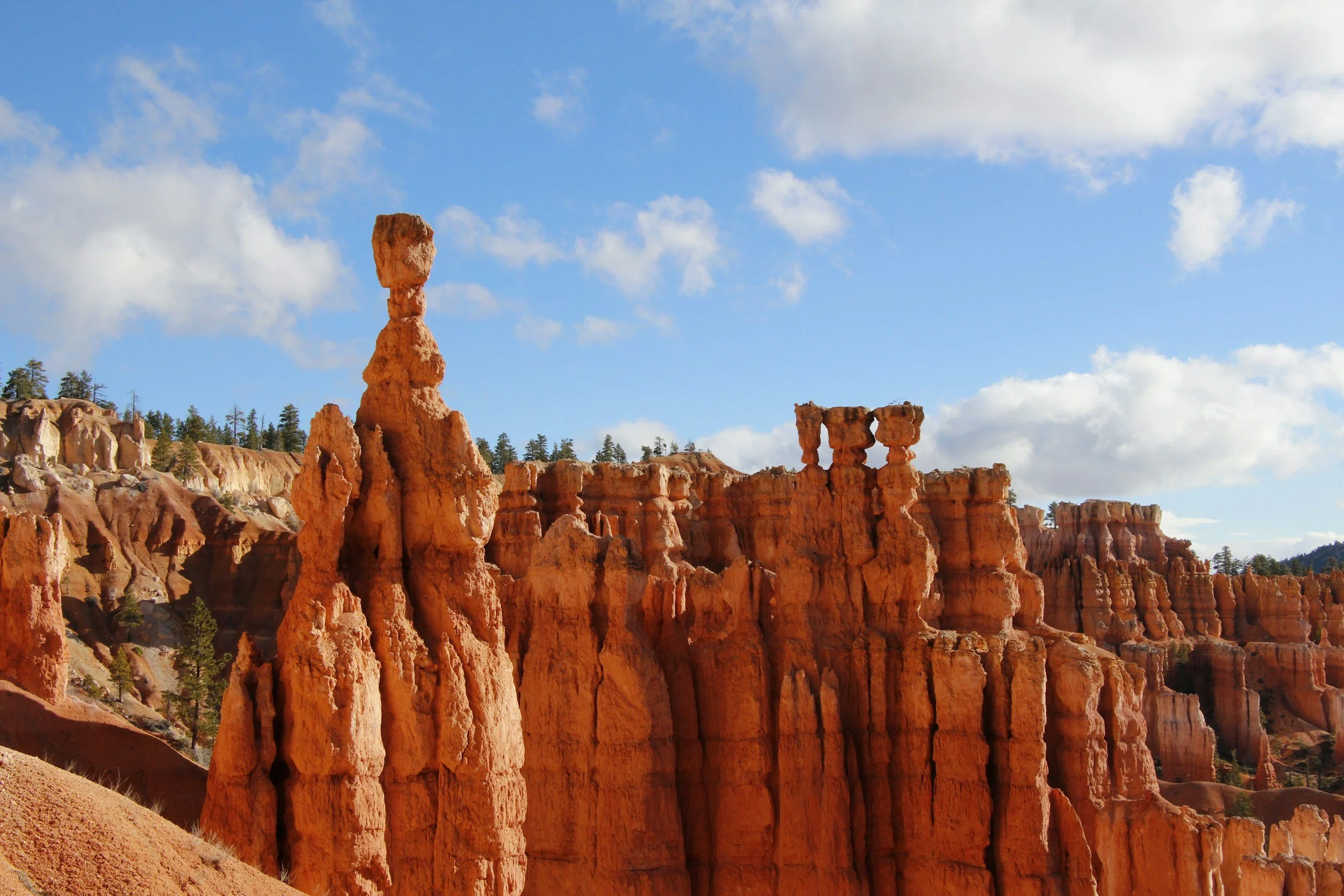
Bryce Canyon's iconic hoodoos are colorful rock spires sculpted by millions of years of erosion, creating one of the most unique landscapes in the world.
Before you step onto the rim, it helps to understand what you're looking at, because it makes the whole experience more vivid.
Bryce Canyon is technically not a canyon at all. It's a series of natural amphitheaters carved into the eastern edge of the Paunsaugunt Plateau by a geological process called frost weathering (also called freeze-thaw erosion). Bryce sits at an elevation where temperatures drop below freezing more than 200 nights per year. Water seeps into cracks in the rock, freezes, expands, and gradually breaks the rock apart. Over millions of years, this process — combined with rainwater erosion — carved the plateau edge into the dramatic formations you see today.
The hoodoos themselves are columns of relatively hard limestone that have resisted erosion longer than the surrounding rock. Many are capped by a harder layer of dolomite that acts as a protective "hat," slowing the erosion of the softer limestone beneath. The result is thousands of pillars in wildly varied shapes and heights, ranging from a few feet to over 200 feet tall.
The colors come from mineral content in the rock: iron oxides produce the reds and oranges, manganese creates the whites and purples, and the varying concentrations of these minerals in different sediment layers create the banded, multi-toned appearance that makes Bryce so visually striking.
How to Spend One Perfect Day at Bryce Canyon
Leave Zion Early
Aim to be on the road by 7:00 or 7:30 a.m. Bryce Canyon gets busy by mid-morning, especially during summer, and the hoodoos look their most dramatic in the early light when long shadows bring out the texture and depth of the formations. You'll also want time to do the signature hike before the heat of the day — even at elevation, Bryce can warm up significantly by noon in summer.
Stop at the Visitor Center First (But Briefly)
Bryce Canyon Visitor Center: Just inside the park entrance. It's worth a 15-minute stop to pick up a trail map, check current conditions (trail closures, weather, snow in early season), and get oriented. The rangers here are genuinely helpful and will give you honest, current information about which trails are most worth your time given the day's conditions.
Entry fee: Bryce Canyon charges a $35 vehicle entrance fee (or use your America the Beautiful pass, which covers both Bryce and Zion). If you haven't already purchased one, this trip makes the annual pass an easy value.
The Hike You Shouldn't Miss: Queen's Garden / Navajo Loop Combination
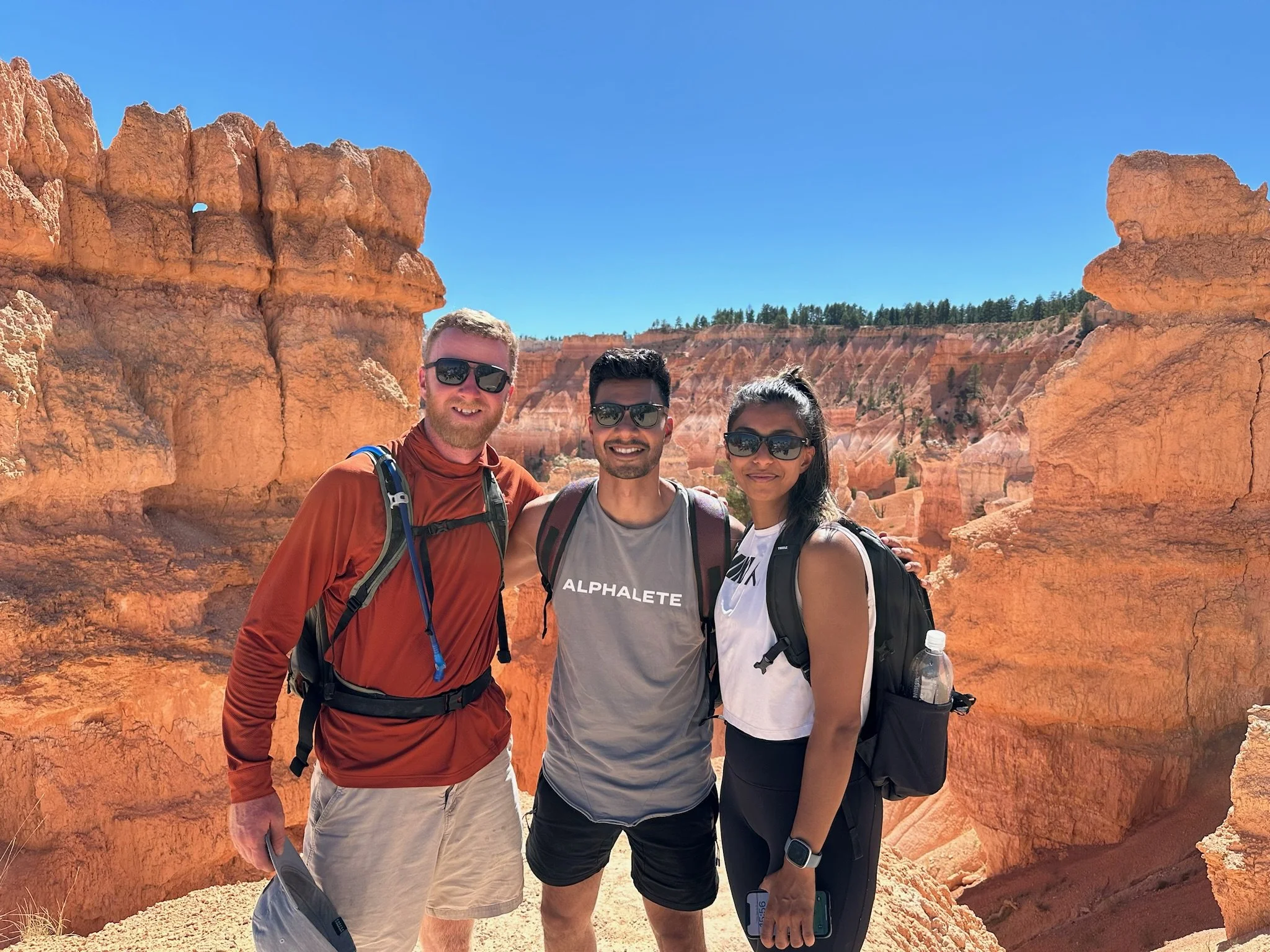
Experience Bryce Canyon like never before with a guided hike through its world-famous hoodoos.
If you only have time for one trail, this is the one.
The Queen's Garden / Navajo Loop Combination Trail is roughly 3 miles with about 550 feet of elevation change, and it gives you the most complete experience of the park's interior — not just views from the rim, but total immersion in the hoodoos themselves.
Here's how to hike it:
Start at Sunrise Point and descend the Queen's Garden Trail into the amphitheater. The trail switchbacks steeply down the canyon wall before leveling out among the hoodoos. You'll pass Queen Victoria, a formation that, with some imagination, does resemble a figure in a crown, and wind through a landscape that feels genuinely alien. The silence in here is striking. Sound behaves oddly among the hoodoos, and the scale of the formations only becomes clear when you're standing next to them.
At the trail junction, turn onto the Navajo Loop Trail and make your way toward Wall Street, a narrow slot canyon between two soaring hoodoo walls, with Douglas fir trees growing improbably from the canyon floor, their roots reaching hundreds of feet down through cracks in the rock to find moisture. Note: Wall Street is sometimes closed in early season due to rockfall or ice. If it's closed, the alternate route around Two Bridges is still scenic and worth doing.
The Navajo Loop exits back up to the rim at Sunset Point, where you'll have a short walk back along the rim to Sunset Point.
Trail stats:
Distance: ~3 miles (loop)
Elevation gain: ~550 feet
Time: 2–3 hours
Difficulty: Moderate (steep but well-maintained)
Tips:
Hike it counterclockwise (Queen's Garden first, Navajo Loop out) — this is generally easier on the knees
Bring at least 2 liters of water per person, even in cool weather
Trekking poles are genuinely useful on the descent and ascent
The altitude (8,000+ feet) affects exertion more than most people expect, especially if you've been living at sea level
The Rim Trail: Walk Between Viewpoints
After your hike, the Rim Trail connects all the major viewpoints along the canyon edge and is almost entirely flat. Walking between viewpoints on the rim gives you a completely different perspective than the trail below, you're now looking across the amphitheaters rather than through them.
Don't skip these viewpoints:
Sunrise Point — Best in the morning (surprise), with sweeping views of the main amphitheater
Sunset Point — One of the most photographed spots in the park; the Wall Street canyon is visible from here
Inspiration Point — Arguably the best panoramic view of the park; from here you can see thousands of hoodoos stretching across three distinct amphitheaters simultaneously
Bryce Point — The southernmost of the main viewpoints, often less crowded, with a view that extends across the entire Bryce Amphitheater
If you have time to drive the full scenic road (an 18-mile out-and-back to Rainbow Point at 9,115 feet), Natural Bridge and Rainbow Point are worth the extra 45 minutes. Natural Bridge is a 95-foot natural arch carved by erosion — technically not a bridge, but stunning regardless.
Afternoon: Slow Down and Let It Sink In
Bryce rewards patience in a way that Zion, with its shuttle logistics and crowds, sometimes doesn't. Plan to spend time simply sitting on the rim and watching the light change. The colors of the hoodoos shift noticeably throughout the day as the sun angle changes — morning light emphasizes the reds, midday bleaches some of the color out, and late afternoon brings a warm golden hue that makes the formations almost appear to glow.
Photographers know that Bryce is best at sunrise and sunset. If you're able to time your visit around either, you'll be rewarded with some of the most dramatic natural light you've ever seen.
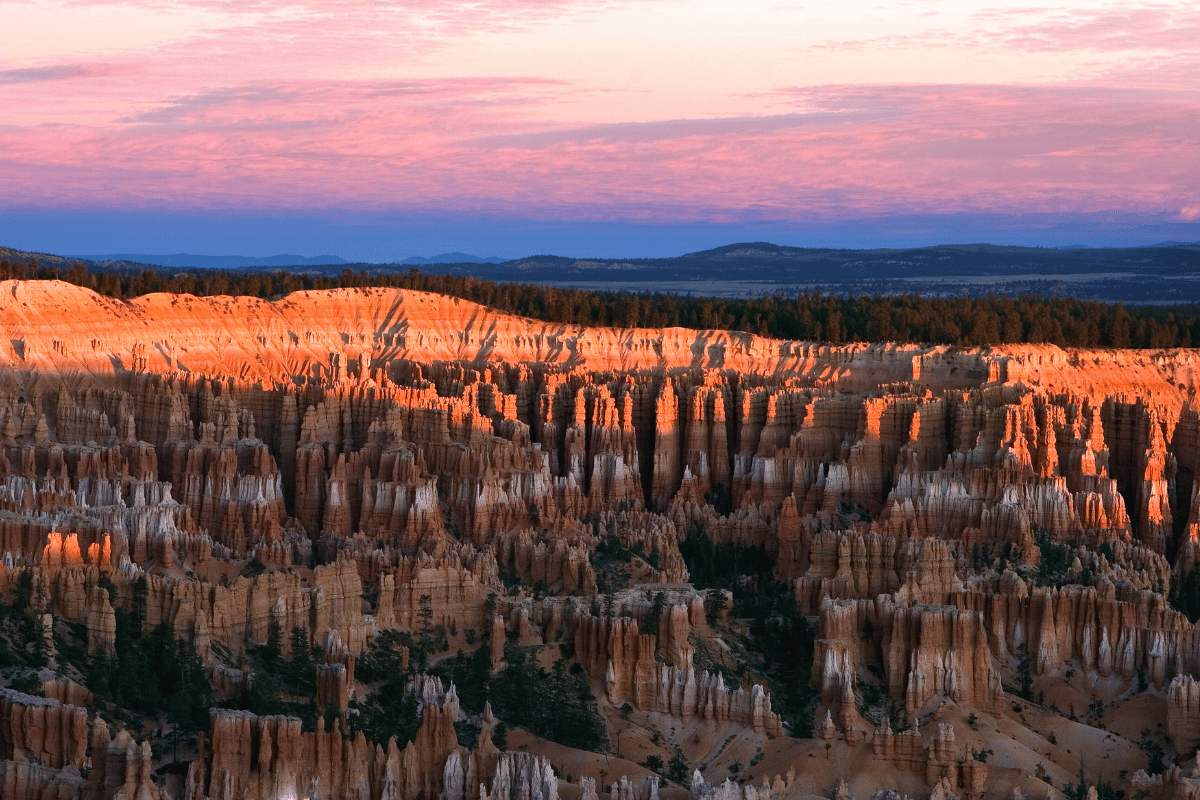
Sunset at Bryce Canyon National Park.
Dinner: Bryce Canyon Pines Restaurant
After a full day on your feet, you've earned a good meal before the drive back.
Bryce Canyon Pines Restaurant (located on UT-12 just outside the park entrance) has been a local institution for decades. It's not fancy, but the food is genuinely good and the portions are substantial, exactly what you need after a day of hiking at altitude.
Order the Elk Burger. Get the waffle fries. This is not a suggestion, it's practical advice from people who have been sending guests on this day trip for years. The elk is locally sourced, leaner than beef, and served with more care than you'd expect from a roadside restaurant.
The homemade pies are also worth serious consideration. The restaurant is known for them, and the fruit pies rotate seasonally.
Practical note: The restaurant fills up in the early evening during summer. Plan to arrive by 5:30 or 6:00 p.m. to avoid a long wait. They do not take reservations.
Add a Canyoneering Stop Along the Way
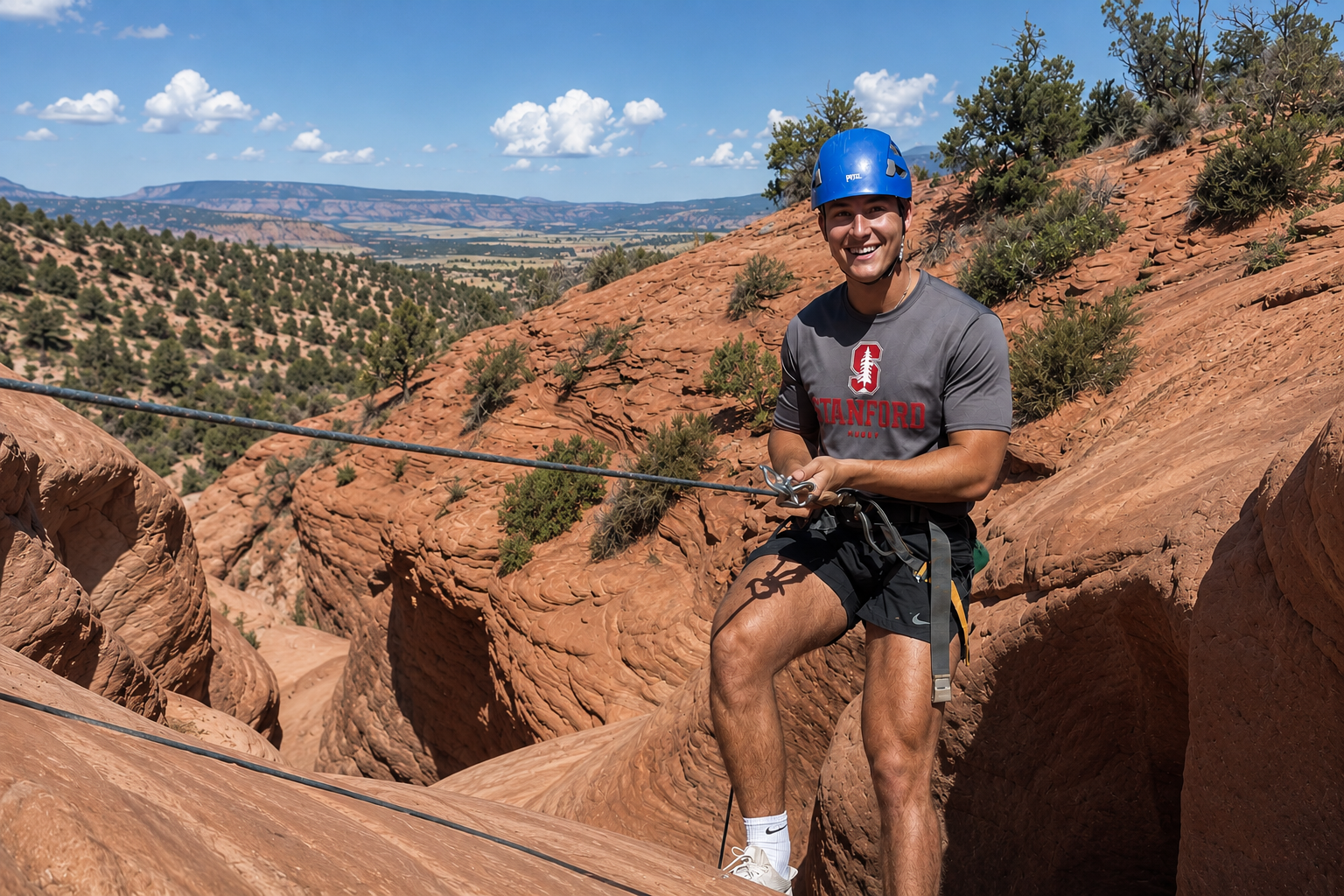
Add some excitement to your Zion-to-Bryce road trip with a guided canyoneering adventure at Elkheart Cliffs Canyon, featuring scenic rappels, stunning sandstone walls, and unforgettable views.
If you want to turn the day trip into a genuinely full adventure, consider adding a canyoneering experience at Elkheart Cliffs Canyon, located roughly halfway between Zion and Bryce, which makes it a natural stop in either direction.
This guided experience includes slot canyon hiking, rappelling off sandstone walls, and navigating through formations that feel like a more intimate, hands-on version of the scenery you'll see from the rim at Bryce. The canyon walls here are Navajo sandstone, the same rock you see throughout Zion — and the rappels range from beginner-friendly to genuinely thrilling.
No experience is necessary. Our guides provide all equipment and instruction, and they'll match the technical level of the experience to your group's comfort. For many guests, canyoneering at Elkheart Cliffs ends up being the single thing they talk about most when they get home.
It's also an excellent way to break up the drive, you'll arrive at Bryce energized rather than stiff from two hours in the car.
Practical Information
Best time to visit: May through October for dry trails and comfortable hiking temperatures. June and September hit a sweet spot, past the worst snowmelt mud, before the monsoon season brings afternoon thunderstorms.
Weather at altitude: Always bring a layer. Even in July, temperatures at Bryce can drop significantly in the shade or if clouds move in. Afternoon thunderstorms are common July through September, plan to be off exposed trails by early afternoon.
Snow: Bryce receives significant snowfall and the hoodoos look extraordinary in winter. However, trails can be icy and treacherous. Microspikes or traction devices are recommended for winter visits.
Cell service: Limited inside the park. Download the Bryce Canyon NPS app and an offline map before you leave Zion.
Crowds: Bryce is one of the most visited parks in Utah. To beat the worst congestion, arrive before 9:00 a.m. or after 4:00 p.m. The park does not currently require timed-entry permits as Zion does, but this is subject to change — check the NPS website before your trip.
The Case for Doing Both Parks
People often ask whether they should spend another day at Zion or use that day to visit Bryce. The honest answer is that it depends on what you've already seen — but if you've hiked Angels Landing and the Narrows, you've hit Zion's two signature experiences. A fourth or fifth day in Zion is likely to mean repeating trails or filling time with less essential hikes.
A day at Bryce, by contrast, is something completely new. Different geology, different scale, different feeling entirely. The parks complement each other in a way that few destinations in the country can match, and the drive between them is one of the most scenic in Southern Utah.
If you have the day to spare, use it.
Planning a Bryce Canyon day trip from Zion and want help with the logistics? Our team can put together a custom itinerary with guided hiking tours, mountain bike adventures, or a canyoneering experience at Elkheart Cliffs Canyon. Reach out, and we'll make sure you see the best of Southern Utah.